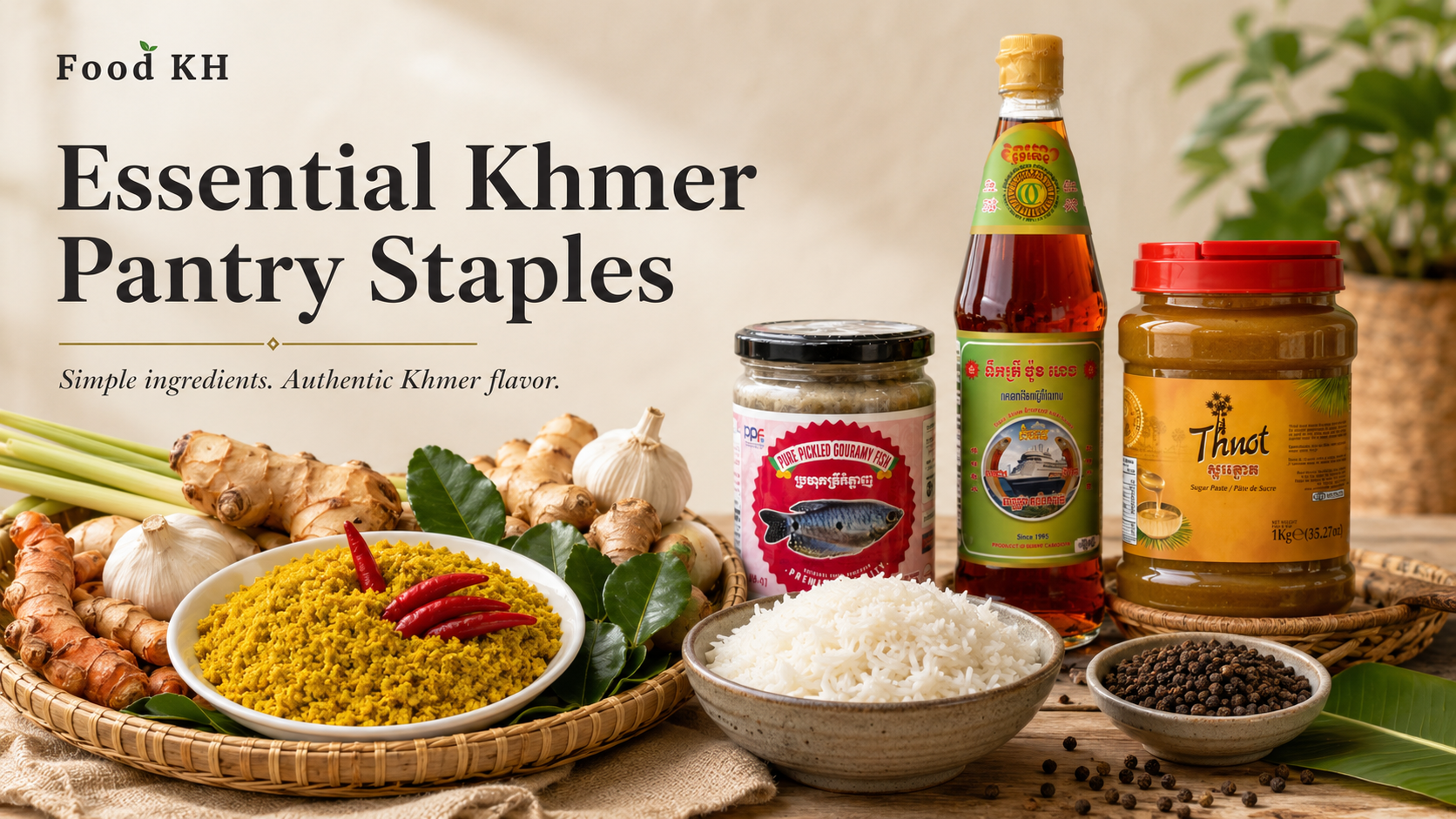
Essential Khmer Pantry Staples: The Heart of the Cambodian Kitchen​

A warm, top-down shot of a wooden kitchen table featuring small bowls of spices, a jar of palm sugar, a bundle of lemongrass, and a bowl of steaming jasmine rice.

The Soul of Khmer Cooking

If you’ve ever walked into a Khmer kitchen during dinner prep, you know the smell—the bright citrus of lemongrass, the deep savory aroma of fermented spices, and the sweet scent of jasmine rice steaming in the background.

For many of us in the Cambodian-American community, these scents are more than just food; they are memories of home. At Food KH, we believe that the secret to Great Khmer cooking isn’t just in the technique, but in the authenticity of the ingredients. By keeping a few essential staples in your pantry, you can bring the unique, balanced flavors of Cambodia—salty, sweet, sour, and savory—to your own dinner table, no matter where you live.
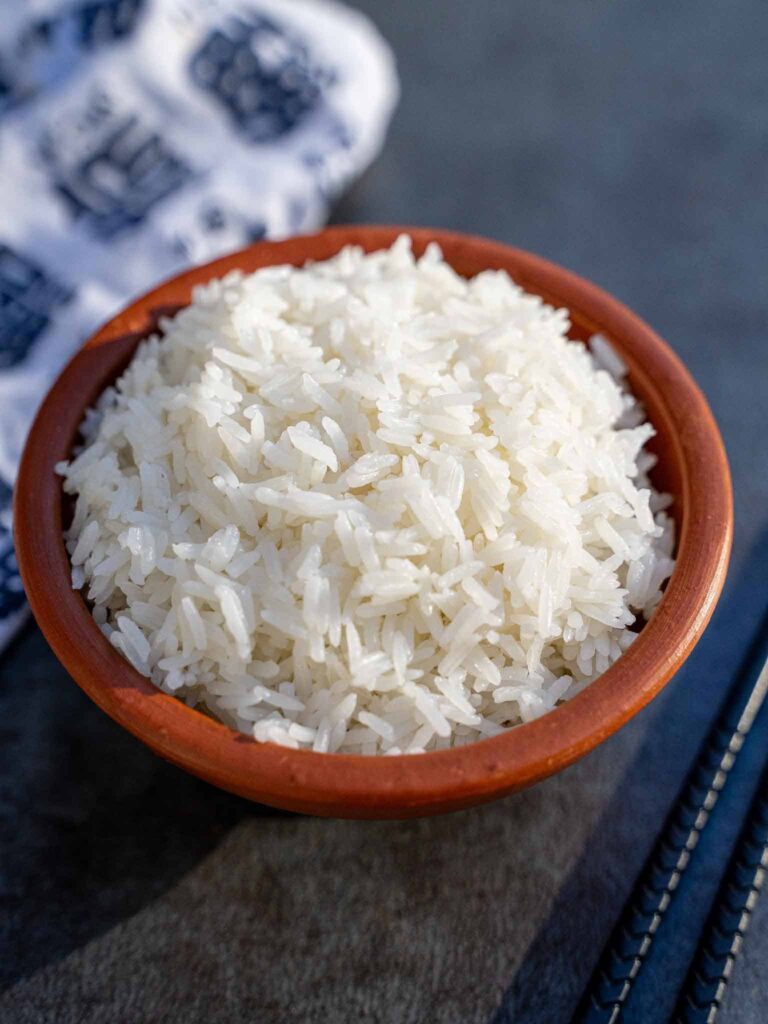
Jasmine Rice: The Foundation of Every Meal

In Cambodia, we don’t just “eat a meal”—the literal translation for eating is nham baiy, which means “to eat rice.” Jasmine rice is the heart of our culture. It is prized for its floral aroma and soft, slightly sticky texture that perfectly soaks up the juices of a stir-fry or the rich broth of a Samlor (soup).

  • How to use it: Serve it alongside every meal. For the best experience, rinse the rice until the water runs clear to ensure a fluffy texture.

  • Classic Dish: Any traditional Khmer stir-fry or soup, like Samlor Machu Youn.

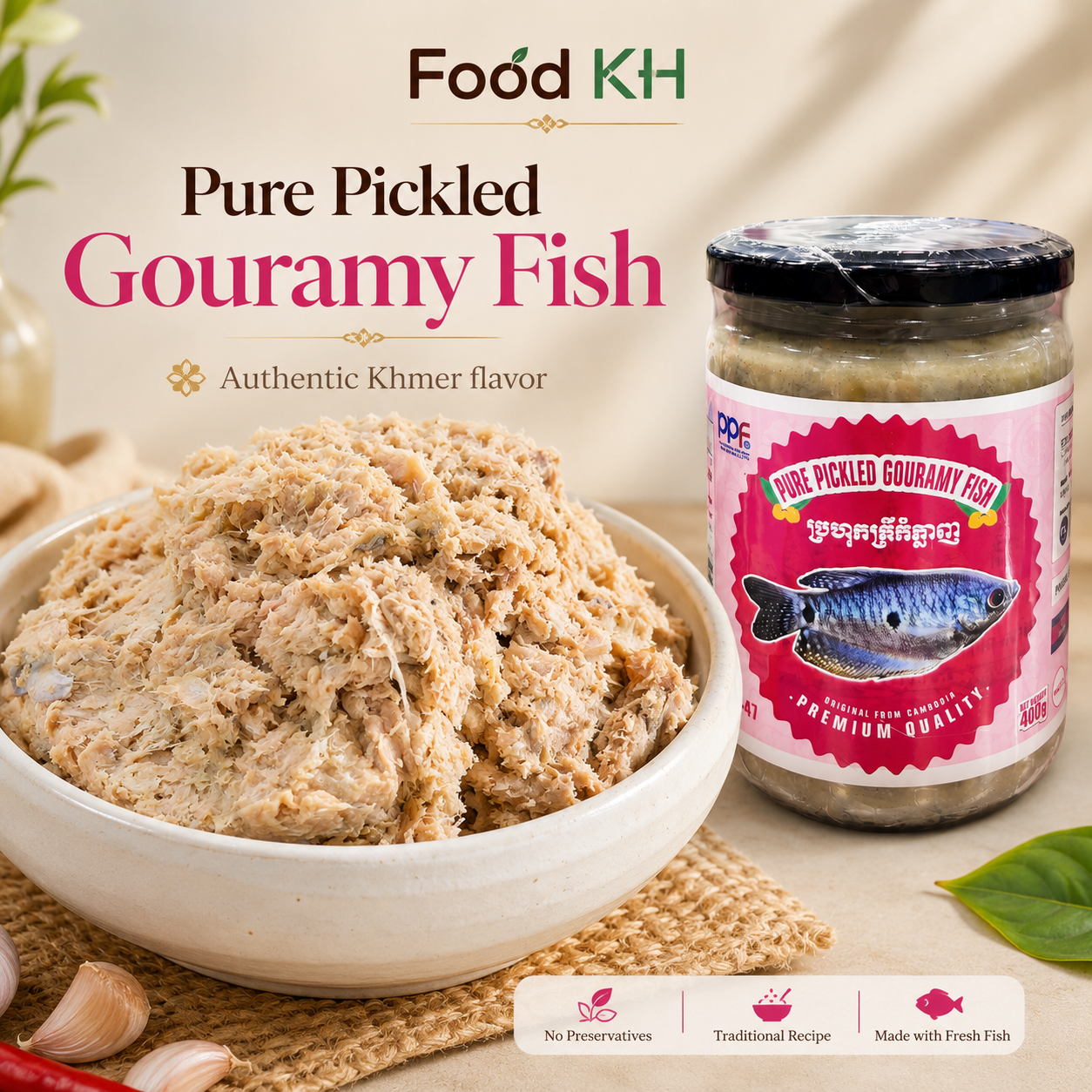
Prahok & Fermented Flavors: The Savory Secret

Often called "Cambodian Cheese," Prahok (fermented fish paste) is what gives Khmer food its distinct "umami" or savory depth. It is the backbone of traditional country cooking. While the scent is strong, it transforms during cooking into a rich, complex flavor that defines the Cambodian palate. How to use it: It can be minced and added to soups, or served as a dipping sauce (Prahok Ktis) with fresh vegetables. Classic Dish: Samlor Korko (Stirring Soup) or Maju Kreoung.

Fish Sauce: The Essential Seasoning

If Prahok is the soul, Fish Sauce is the heartbeat. It provides the essential saltiness and depth required for almost every dish. For those looking for that specific fermented tang used in salads, a high-quality papaya salad sauce often uses a similar fermented base to get the flavor just right.

  • How to use it: Use it in place of salt in stir-fries, marinades, and dressing.

  • Classic Dish: Bok L’hong (Papaya Salad).

Palm Sugar: Nature’s Gentle Sweetener

Authentic Cambodian food is all about balance. We use Palm Sugar to round out the saltiness of fish sauce and the spice of chilies. Unlike white sugar, palm sugar has a rich, caramel-like flavor and a lower glycemic index. It’s made from the sap of the Palmyra palm tree, a national symbol of Cambodia.

  • How to use it: Add a small spoonful to your stir-fries or curries to balance the flavors.

Classic Dish: Khor (Caramelized Pork and Eggs).

Kroeung: The Magic Spice Paste

Kroeung is the yellow-gold paste that forms the base of Cambodian curries and marinades. It is a pounded mixture of lemongrass, galangal, turmeric, kaffir lime leaves, and garlic. It’s what gives Khmer food its vibrant color and “fresh” earthy taste.

  • How to use it: Sauté the paste in oil before adding your meat or vegetables to release the aromatics.

Classic Dish: Amok (Steamed Fish Curry) or Sngor (Lemongrass Soup).

Kampot Pepper: The King of Spices

Widely considered the best pepper in the world, Kampot Pepper is a gourmet staple that belongs in every pantry. It has a unique floral heat that is less aggressive than standard black pepper, making it perfect for highlighting the natural flavors of seafood and beef.

  • How to use it: Grind it fresh over your dishes or use the whole peppercorns in sauces.

Classic Dish: Lok Lak 

© 2026 Food KH. All Rights Reserved.